- Table of Contents
- What Is Need-Based Financial Aid?
- FAFSA and International Students
- What Is Need-Blind Admissions?
- Universities That Meet 100% Financial Need for International Students
- Financial Aid Without US Citizenship: Is It Possible?
- How to Apply for Need-Based Financial Aid as an International Student
- Quick Comparison: Need-Based Aid at Top Universities
- Common Mistakes to Avoid
- Frequently Asked Questions
- Conclusion
Need-Based Financial Aid for International Students in USA 2026
A lot of Pakistani students believe that they are unable to afford a university in the USA. They simply glance at the tuition fees and simply walk away without applying. However, what most students don’t know is this.

There are actually some of the most expensive universities in the USA that are free or almost free for the students who really can’t afford them. The universities provide need-based financial aid for international students USA on the income of the family and not on the nationality.
This guide provides a breakdown of the process of need-based aid, where it’s available, what materials you’ll need and how to apply appropriately.
What You'll Learn
- What Is Need-Based Financial Aid?
- FAFSA and International Students
- What Is Need-Blind Admissions?
- Universities That Meet 100% Financial Need for International Students
- Financial Aid Without US Citizenship: Is It Possible?
- How to Apply for Need-Based Financial Aid as an International Student
- Quick Comparison: Need-Based Aid at Top Universities
- Common Mistakes When Applying for Need-Based Aid
- Conclusion
- FAQS
What Is Need-Based Financial Aid?
Financial aid based on need is funds awarded to a student based on the financial need that the family is unable to cover. It’s not on your grades. It is based on your financial situation.
A university is going to consider your family’s income, savings, property, and expenses when figuring out how much they should offer you in terms of financial aid. They then determine the amount that your family can afford to contribute to your education. The remaining amount is covered by the University.
This is known as financial need assessment. While each university has its own way to determine financial need, most top-tier private universities rely on the CSS Profile for financial data.
FAFSA and International Students
FAFSA is the Free Application for Federal Student Aid. Main financial aid form of the US government.
The majority of international students are not eligible to apply for FAFSA. Federal aid based on FAFSA is only available for US citizens or permanent residents. This is one of the greatest misconceptions of Pakistani students.
Some universities, however, require international students to fill out FAFSA in addition to their university’s forms for their own records. Please consult each university individually.
International students should fill out the CSS Profile, not FAFSA, as the primary financial aid application. The College Board maintains the CSS Profile and uses it to determine financial need for institutional aid by more than 400 universities and scholarship programs. It is completed at cssprofile.collegeboard.org.
What Is Need-Blind Admissions?
Automatic merit scholarships: refers to a university’s admissions process in which the financial ability to pay is not a factor. No financial considerations are made in acceptance.
This is very important for international students. At a need-blind university, you can apply and get admitted on the strength of your academic profile alone. When you’re in, the university determines the amount of assistance to provide.
Need-blind universities for international students USA are uncommon. There are very few universities that are need-blind for international candidates.
MIT is one of the clearest examples. MIT follows a need-blind admissions policy for all students including international applicants and then meets 100 percent of demonstrated financial need for every admitted undergraduate.
Most of the other universities, including generous ones such as Harvard and Stanford, are need-blind for international students.
This will allow your finances to be taken into account when you are being admitted. They do, however, provide extremely generous packages of aid to those who are accepted as students if they have a high level of need.
Universities That Meet 100% Financial Need for International Students
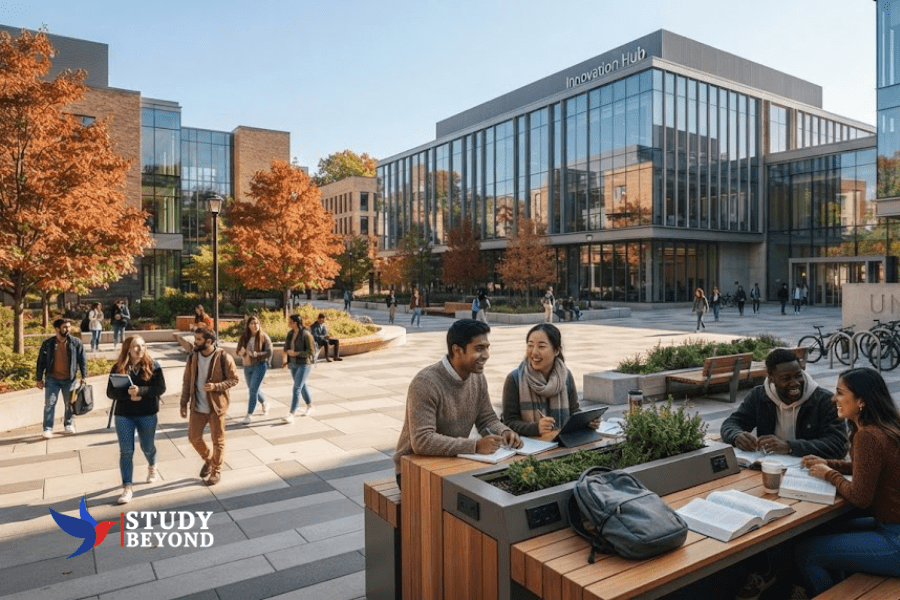
The following is a list of Universities That Meet 100% Financial Need for International Students. If your family really can’t afford to send you to the USA, these are your best choices. These are the need-blind universities for international students USA list.
Harvard University
Harvard fully meets the demonstrated financial need of every admitted student, even international students. The Harvard Access Grant is based on a family’s verified income and provides tuition, housing and necessary academic expenses. It is not too expensive for students from the poorest families to attend Harvard. Harvard is also one of the most selective universities in the world, but if you are admitted and have financial need, you won’t be deterred.
Read this Harvard University admission guide in full on Study Beyond.
MIT
MIT’s admissions policy is need blind, and it covers 100% of demonstrated financial need for all admitted undergraduate students, irrespective of their country of origin. MIT scholarships are grants that do not need to be repaid. In addition, graduate students in STEM disciplines can apply for research and teaching assistantships, which include full tuition and include a monthly stipend.
Check out Study Beyond’s MIT scholarships guide and MIT admission guide.
Princeton University
Princeton is 100% need-blind for all admitted students. At Princeton, we have a no-loan policy: All of our aid is in the form of a grant, which you never have to pay back. The endowment of Princeton is one of the largest in the world at a university, and this is a source of greater funding for support of the students than at almost any other university. Low-income students have the opportunity to attend Princeton tuition-free
Read the UPenn and Princeton admission guide on Study Beyond.
Stanford University
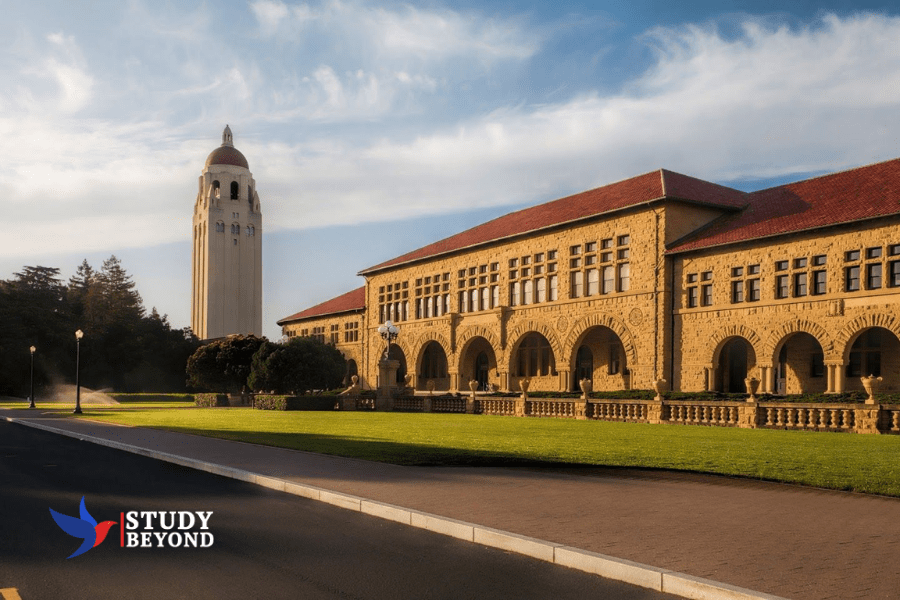
Stanford offers substantial financial assistance in the form of Cardinal Aid Grant, which is offered to cover tuition, housing and critical expenses. For international students, Stanford is need-blind, which means that your financial situation is taken into account when you are applying for admission. But even for students who have been accepted to Stanford with financial need, the school has very generous financial aid packages. The Knight-Hennessy Scholars Program also offers full scholarships for outstanding international students to study at Stanford.
Read Stanford University admission guide at Study Beyond.
University of Pennsylvania
The Penn Access Grant is available for students from families of demonstrated financial need at UPenn. It includes tuition, housing and basic costs. Admitted international students who meet the requirements for institutional aid are eligible for substantial institutional aid at UPenn, which is also need-blind. Global Penn Fellows are also eligible for partial tuition and living support, as well.
Go over the UPenn admission guide on Study Beyond.
UC Berkeley
The Golden State Need Grant is available to students who have demonstrated financial need at UC Berkeley. Graduate students may also apply for fellowships within the department or for research positions that are funded. UC Berkeley is mainly public institution, and need-blind admissions for international students are less than that of top private universities. It’s still one of the more favorable choices for foreign students who want some form of financial aid, though, when it comes to public universities.
Check out the UC Berkeley admission guide on Study Beyond.
Michigan State University
Michigan State has need-based grants for international students who have been determined to have financial need and meet the admission criteria. The grant covers tuition expenses and living expenses. Full funding for STEM graduate students is available for research and teaching assistantships as well.
Check out the Michigan State University admission guide on Study Beyond.
Financial Aid Without US Citizenship: Is It Possible?
Yes. It is definitely possible to get Financial aid without US citizenship , but it is provided by the universities themselves, not the US government.
Below is a breakdown of where international students may receive financial aid, if they are not a citizen of the United States.
The primary source is University institutional aid. Even elite private universities, such as Harvard, MIT and Princeton, have their own financial aid programs, independent of the government. They may donate this to any student, including international students as well.
Another alternative is a government scholarship from your country of origin. Fulbright Pakistan Scholarship is the most popular. It is sponsored by the U.S. government and managed by the Pakistani-American Commission and is accessible to Pakistani citizens.
International students are also eligible for funding from private foundations and external scholarships. There are various organizations such as Aga Khan Foundation and programs from USAID that aid international students who are studying in the USA at the graduate level.
All scholarships available are listed on the Study Beyond scholarships page.
How to Apply for Need-Based Financial Aid as an International Student
This is a simple and step-by-step process.
Step 1: Do some research to find out which universities will provide need-blind admissions for international students. This is not available in all universities. Target your applications to the schools specifically mentioned in this guide and schools that make it clear that they offer need-blind admissions to international students.
Step 2: Fill out the CSS profile universities. Go to cssprofile.collegeboard.org and fill out the form carefully. The CSS Profile questions your parents’ income, parents’ savings, property, and monthly expense. Submit before or at the same date as admission application.
Step 3: Collect financial paperwork. You will need to provide salary slips or income certificates from your parents, bank statements for the last three to six months, tax documents (if applicable) and any other proof of family income.
Students from South Asia need to meet certain document requirements at MIT and Harvard. Please visit each university’s financial aid website for the specific list.
Step 4: Complete the financial aid application at the same time as you complete the admissions application. Avoid applying for aid after you have been offered admission. Financial aid documents are typically submitted along with, or shortly after, an admission application to most universities.
Step 5: Read your aid offer very carefully. The university will send you a financial aid award letter if you are admitted if you will receive any grant money, if the financial aid will contain any loans, and if work-study will be included. Shop around at various institutions.
Quick Comparison: Need-Based Aid at Top Universities
| University | Need-Blind for Internationals | Meets 100% of Need | Main Aid Form |
|---|---|---|---|
| MIT | Yes | Yes | CSS Profile |
| Harvard | No (need-aware) | Yes | CSS Profile |
| Princeton | No (need-aware) | Yes | CSS Profile |
| Stanford | No (need-aware) | Near full | CSS Profile |
| UPenn | No (need-aware) | Significant portion | CSS Profile and FAFSA |
| UC Berkeley | No | Partial | CSS Profile and FAFSA |
| Michigan State | No | Partial | CSS Profile and FAFSA |
Common Mistakes When Applying for Need-Based Aid
Applying for FAFSA international students for most international students, federal aid (FAFSA) is not available. It is not necessary to fill out this type of form unless it is required by a particular university.
Trying to apply to public universities with the hope of receiving need-blind admission. Need-blind financial aid is not offered by most public universities to international students. Target need-based aid to top-tier private schools.
Incomplete or incorrect financial records. All financial information is verified by universities. If there is missing information or documents, your application may be rejected or your aid offer may be delayed.
Not applying for need-based aid because you do not think you will be eligible. If your family’s income really is low, apply. It is up to the universities to evaluate themselves. You might be offered a lot more help than you think you will need.
Applying for aid after being accepted to school. Most applications for need-based aid are considered in conjunction with, or after, an application for admission. Late applications may only receive partial or no assistance.
Frequently Asked Questions
Q1: Do U.S. universities give need-based aid to international students?
Yes, but need-based financial aid is more commonly available at highly selective private universities. Institutions such as Harvard, MIT, Princeton, Stanford, and Yale may provide generous financial aid packages that can cover a significant portion of the total cost of attendance for eligible international students. Need-blind admission is less common at public universities for international applicants.
Q2: What is the CSS Profile, and do international students need it?
The CSS Profile is a financial aid application used by many private U.S. universities to evaluate a student’s financial need for institutional scholarships and grants. International students seeking need-based financial aid may need to complete it, depending on the university’s requirements.
Q3: Are there need-blind universities for international students in the USA?
Yes, but they are rare. MIT is one well-known example of a university that offers need-blind admission to international students. A small number of other institutions, including Amherst College and Curtis Institute of Music, also have need-blind policies for international applicants. Policies can vary, so always verify the current requirements of each university.
Q4: Can Pakistani students get financial aid without U.S. citizenship?
Yes. Pakistani students do not need U.S. citizenship to qualify for certain forms of financial support. Some private universities offer institutional aid to international students, while external programs such as the Aga Khan Foundation fellowships and Fulbright Pakistan Scholarship may also provide funding opportunities.
Q5: Which universities meet 100% of demonstrated financial need for international students?
Harvard, MIT, and Princeton are among the most well-known universities that meet 100% of demonstrated financial need for admitted international students. Stanford and Yale also offer highly generous need-based financial aid packages to eligible students.
Q6: What documents do I need to apply for need-based financial aid in the USA?
Depending on the university, applicants may need the CSS Profile, parents’ salary slips, bank statements, tax documents (if applicable), and other financial records. Always review the financial aid requirements of each university to confirm the exact documents needed.
Conclusion
The need-based financial aid for international students USA is genuine and accessible. It is offered by some of the top universities in the world. If it’s really true that your family simply can’t afford an American education, then you shouldn’t think twice about Harvard, MIT, or Princeton. These universities are looking for good students from all walks, and they have the funds to support them.
The most important thing to know is which universities to apply to, to submit your CSS Profile and financial paperwork in time, and to be honest and accurate throughout your application.
Study Beyond assists Pakistani students to know about financial aid options, identify appropriate universities and ensure that they submit complete and accurate applications.
See our comprehensive scholarship guide and read our university guides for Harvard, MIT, Stanford and UPenn, UC Berkeley and Michigan State University.
Call contact Study Beyond today for a free consultation, and we will guide you to the best financial aid option to pursue your US education.