
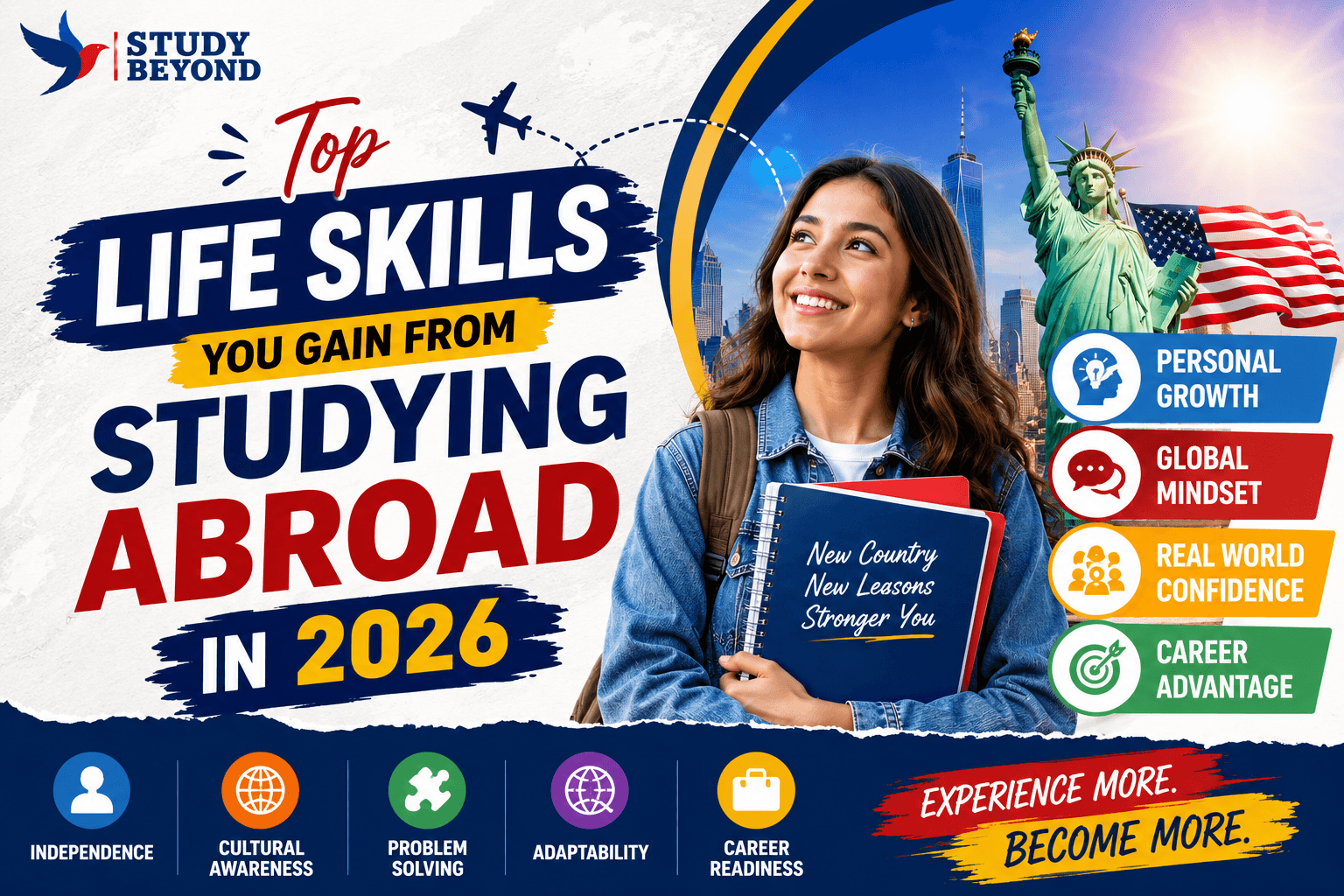
Why Studying Abroad Life Skills Are Worth Your Attention
Students who spend time at a university overseas return with more than a transcript full of foreign course credits. They come back with a global perspective that reshapes how they see challenges, collaborate across difference, and contribute to their communities. Employers across industries have made it clear that graduates who can demonstrate cross cultural communication and real world adaptability are among the most attractive candidates they encounter. A semester or year abroad delivers exactly those qualities in a way that domestic study simply cannot replicate.
The personal development through travel that happens during an international program often catches students off guard. You expect to attend lectures and visit famous landmarks. What you do not always expect is how profoundly your sense of self and your capacity for independence and responsibility will be tested and strengthened. Managing a budget in a new currency, solving a housing dispute in a second language, and building friendships across cultural lines are all experiences that quietly but permanently expand who you are as a person and as a professional.
Key Insight: According to research on international education benefits, graduates who studied abroad are significantly more likely to find employment within six months of finishing their degree compared to peers who studied only domestically — and they consistently report higher starting salaries in their first roles.
Types of Life Skills You Build Abroad
The studying abroad life skills students develop span a wide range of personal, professional, and interpersonal areas. Here are six core skill categories that virtually every international student gains during their time overseas.
Living within a different culture teaches you to observe, respect, and understand the values and customs of others — a skill that defines truly effective global citizens.
Managing daily life far from home sharpens your ability to make decisions, handle setbacks, and take full ownership of your time and commitments without a safety net.
Expressing yourself clearly across language and cultural barriers builds a level of communicative confidence and precision that stays with you throughout your career.
Navigating unfamiliar systems, unexpected disruptions, and new social norms trains your brain to stay calm, think creatively, and find workable solutions under pressure.
The relationships you form with fellow students, professors, and professionals from around the world become a lifelong international network that opens doors across borders.
Successfully handling the demands of life in an unfamiliar country builds a quiet, lasting confidence that carries over into academic, personal, and professional situations.
Top Sources for Developing Skills While Studying Abroad
The skills students gain abroad do not come from a single source. They emerge from a combination of structured programs and everyday experiences. These five pathways are where the most meaningful growth tends to happen.
- 1University Exchange Programs — Formal exchange agreements between institutions provide a structured academic framework while placing you inside a fully immersive foreign campus culture where choosing the right program determines the depth of your experience.
- 2Language Immersion Courses — Enrolling in intensive language programs forces you to communicate, think, and even dream in a second language, accelerating both linguistic ability and cultural fluency faster than any classroom at home can achieve.
- 3Volunteer and Service Programs — Contributing to local communities in a host country deepens your cross cultural communication skills while giving you firsthand exposure to global development challenges that shape a more grounded worldview.
- 4Internship Placements Abroad — Working within a foreign company or organization builds career skills from studying abroad that employers actively seek, including the ability to operate professionally across cultural and institutional differences.
- 5Independent Research and Travel — Students who use their free time to explore their host country and neighboring regions develop strong planning, resourcefulness, and intercultural skills that no formal program can fully replicate.
Pro Tip: Keep a weekly reflection journal during your time abroad. Writing down what surprised you, what challenged you, and what you learned each week creates an invaluable record of your growth that you can reference in job interviews and personal statements long after you return home.
Field Specific Growth from International Study
While every student benefits from studying abroad, the specific ways those experiences translate into career and academic advantages depend heavily on your field of study. Here is how different disciplines gain distinct advantages from time spent learning outside the classroom.
STEM and Technology Students
Students in science, technology, engineering, and mathematics who spend time at international research institutions gain exposure to different methodologies, lab cultures, and collaborative models. Many of the world's most respected technical programs are located outside a student's home country, and choosing the right destination for technical study can connect you to research networks and industry partnerships that would be out of reach otherwise. The adaptability and problem solving habits developed in foreign lab environments also make STEM graduates notably more resilient in fast changing professional settings.
Business and Economics Students
For those studying business, international education benefits are immediate and practical. Exposure to different economic systems, management styles, and consumer behaviors builds the kind of global perspective that multinational employers pay a premium for. Students who complete internship placements abroad while enrolled in a foreign business school often return with professional references and industry contacts that become the foundation of their global networking opportunities for years ahead. Understanding how commerce operates differently across regions is a skill that cannot be taught from a textbook alone.
Humanities and Social Sciences Students
Students in history, philosophy, sociology, literature, and related fields often experience the most profound personal transformation during their time abroad because their subjects come alive in entirely new ways. Studying the history of a country while living within it, or analyzing social structures while participating in them daily, produces a depth of understanding that fuels both academic output and leadership skills abroad. These students also tend to develop exceptional cross cultural communication abilities, making them highly valued in fields ranging from education and journalism to diplomacy and nonprofit leadership.
How to Maximize the Life Skills You Gain Abroad
Getting the most out of an international education experience requires intentional effort beyond simply showing up in a new country. These five practices help students build the most durable and transferable skills possible during their time overseas.
- 1Choose a Destination That Challenges You — Selecting a country where you do not already speak the language fluently or feel entirely comfortable accelerates growth in ways that a familiar environment never could. Discomfort is one of the most reliable drivers of skill development.
- 2Engage Actively With Local Communities — Spend time in local markets, join community organizations, attend cultural events, and form genuine friendships with residents rather than limiting your social circle to other international students. This is where real intercultural skills develop.
- 3Take on Leadership Roles — Volunteer to lead group projects, organize student events, or represent your cohort in meetings. Taking on responsibility in an unfamiliar environment builds leadership skills abroad that are both visible and memorable to future employers.
- 4Seek Out Mentors at Your Host Institution — Professors, career advisors, and industry professionals at your host university can become powerful connections in your global networking opportunities if you take the initiative to build those relationships while you are there.
- 5Document and Reflect on Your Growth — Track your experiences, skills gained, and moments of challenge. You can reference this record when applying for jobs or graduate programs, and it becomes a powerful demonstration of your commitment to learning outside the classroom.
Frequently Missed Benefits of Studying Abroad
Most students focus on the obvious gains — language skills and travel memories — but several powerful studying abroad life skills tend to go unrecognized until much later in life.
Financial Literacy in Unfamiliar Economies — Managing a personal budget in a foreign currency, dealing with different banking systems, and learning to compare costs across countries gives students a working knowledge of personal finance that many of their peers simply do not develop until well into adulthood. This real world financial experience is a genuinely underrated component of personal development through travel.
Emotional Resilience Under Pressure — Homesickness, cultural misunderstandings, and moments of genuine isolation are all part of the study abroad experience. Working through those difficulties without the immediate support of family builds emotional intelligence and resilience that help students handle professional setbacks, difficult relationships, and high pressure environments with far greater composure later on.
Comfort With Ambiguity and Uncertainty — Students who live abroad learn to function effectively even when they do not have all the information they need. This tolerance for ambiguity is one of the most sought after qualities in modern workplaces, where conditions change rapidly and employees must act confidently without complete certainty. You can read more about how these traits translate into career skills from studying abroad in our dedicated career guide.
Did You Know? A majority of study abroad alumni report that their international experience was the single most influential factor in shaping their professional identity — ranking it above internships, academic achievements, and extracurricular activities combined.
Begin Your Study Abroad Journey with Purpose
The decision to study internationally is rarely just about academics. It is a commitment to personal transformation, a willingness to be challenged, and a deliberate investment in the kind of growth that textbooks and lecture halls alone cannot provide. The students who get the most out of their time overseas are those who approach it with intention — who actively seek discomfort, build real relationships, and take the time to reflect on what they are learning about themselves and the world around them. Every skill discussed in this article is available to any student willing to show up fully for the experience.
If you are weighing your options and wondering whether the cost and effort are worth it, the answer from nearly every study abroad alumnus is the same: the studying abroad life skills you gain will continue to pay dividends for decades after you return home. Start researching programs, explore your funding options, and take the first concrete step toward one of the most formative decisions you can make as a student.
Frequently Asked Questions
The most consistently cited skills include cultural awareness, independence, adaptability, and cross cultural communication. Students also report significant gains in self confidence and problem solving ability that persist long after the program ends. These are the qualities that employers and graduate schools consistently look for in candidates.
International experience signals to employers that you are adaptable, independent, and comfortable operating in unfamiliar environments — all traits that are highly valued across industries. Students who complete internships or volunteer placements abroad also gain foreign professional references and industry connections that significantly strengthen their job applications.
Not at all. Many highly regarded programs are conducted entirely in English, including those in the Netherlands, Scandinavia, Germany, and Singapore. That said, making even a basic effort to learn the local language of your host country dramatically deepens your cultural immersion and the communication skills you take home with you.
Research suggests that programs of at least one semester produce more lasting personal development than shorter trips. However, even a focused summer program or a six week intensive course can deliver meaningful gains in adaptability and intercultural awareness if you engage actively with the local culture rather than spending most of your time with other international students.
With proper planning, most students can study abroad for one or two semesters without extending their degree timeline. The key is to work closely with your academic advisor before you apply to ensure that your credits will transfer correctly and that your course selections abroad align with your degree requirements at home.
Absolutely. Graduate admissions committees value applicants who demonstrate intellectual curiosity, the ability to function independently in challenging environments, and a genuine global perspective. A well articulated study abroad experience in your personal statement, backed by strong academic performance during that period, can be a compelling differentiator from other candidates with similar grades and test scores.